San Francisco Frenzy Scavenger Hunt
Get ready for a wild adventure through the streets of San Francisco as you race against the clock in our Frenzy Scavenger Hunt.
Your Neighborhood. Your City.
Monday, July 27
Know about an event in South of Market we're missing?
Own a local business? Post your deals & specials free
Prefer email? Get the weekly South of Market digest
Get ready for a wild adventure through the streets of San Francisco as you race against the clock in our Frenzy Scavenger Hunt.

SFMOMA's June Member Mondays offer members an exclusive opportunity to enjoy a quieter museum experience, bypassing weekend crowds. Attendees can enjoy an intimate viewing of the new special exhibition, *Matisse’s Femme au chapeau: A Modern Scandal*, and explore *Reimagined: The Fisher Collection at 10*. This experience is enhanced with complimentary coffee and treats available in the Member Lounge on Floor 4 from 10 a.m.–Noon.

Paul Klee + Ray Johnson: TYPOFACTURE August 23, 2025–July 30, 2026 Floor 2 Writing functions not only as language, but also as a visual and even tactile form. Famed artist and educator Josef Albers imparted this idea to his students at Black Mountain College, a former liberal arts school in North Carolina, where artist Ray Johnson studied from 1945 to 1948. In an exercise called “typofacture,” Albers asked students in his design course to create drawings mimicking printed or handwritten text. After observing textures on surfaces — like speckles on a wall or patterns in a raked garden path — they applied the concept to printed text, which bears the imprint of its production, whether by hand or machine. This activity left a lasting impression on Johnson, a future collage and correspondence artist, whose works (like Paul Klee’s) frequently combine text and representations. Klee’s merging of myth, symbol, figuration, and expression resonated with many at Black Mountain College and shaped Johnson’s approach. In a 1947 letter to a peer, Johnson enclosed an image of Klee’s Actor’s Mask (1924) with the postscript, “I send a Klee with cracks.” His admiration deepened into a recurring influence, visible in his expressive line work and iconic motifs like arrows and spirals. Whereas Klee’s imagery builds dreamlike worlds, Johnson’s marks accumulate like field notes across a creative terrain.

Summer Highlights July 9 – August 27, 2026

Jake Elwes: Zizi in Motion: A Deepfake Drag Utopia (Movement by Wet Mess) May 23–September 6, 2026 Floor 1 What can artificial intelligence (AI) teach us about drag? And what can drag teach us about AI? Media artist Jake Elwes explores these questions in the video installation Zizi in Motion: A Deepfake Drag Utopia (Movement by Wet Mess) to critically examine the complex human and social realities brought into the process of designing digital systems. This presentation brings 21 life-size deepfakes of drag artists to the same stage on a digital LED screen in the museum’s Evelyn and Walter Haas, Jr. Atrium. Elwes collaborated closely with London-based drag queens and kings to collect closed datasets of their likenesses and construct AI-generated versions of themselves that can dance to drag legend Wet Mess’s choreography. Visual disruptions of performers’ appearances and movements bring our attention to AI’s limitations, while suggesting its gender biases and insufficient queer representations in its normative frameworks. As a performance form that challenges societal norms around gender expression, drag becomes a playful tactic for the artist to demystify and subvert these often exploitative technologies and create artwork by and for their community. Drag cast members: Baby Lame, Bolly-Illusion, Bourgeoisie, Cara Melle, Charlie Wood, Chiyo, Dahc Dermur VIII, Dakota Schiffer, HERR, Lilly SnatchDragon, Lavinia Co-op, Luke Slyka, Mahatma Khandi, Mark Anthony, Me The Drag Queen, Miss Terri Boxx, Oedipussi Rex, Ruby Wednesday, Sister Sister, TeTe Bang, Wet Mess

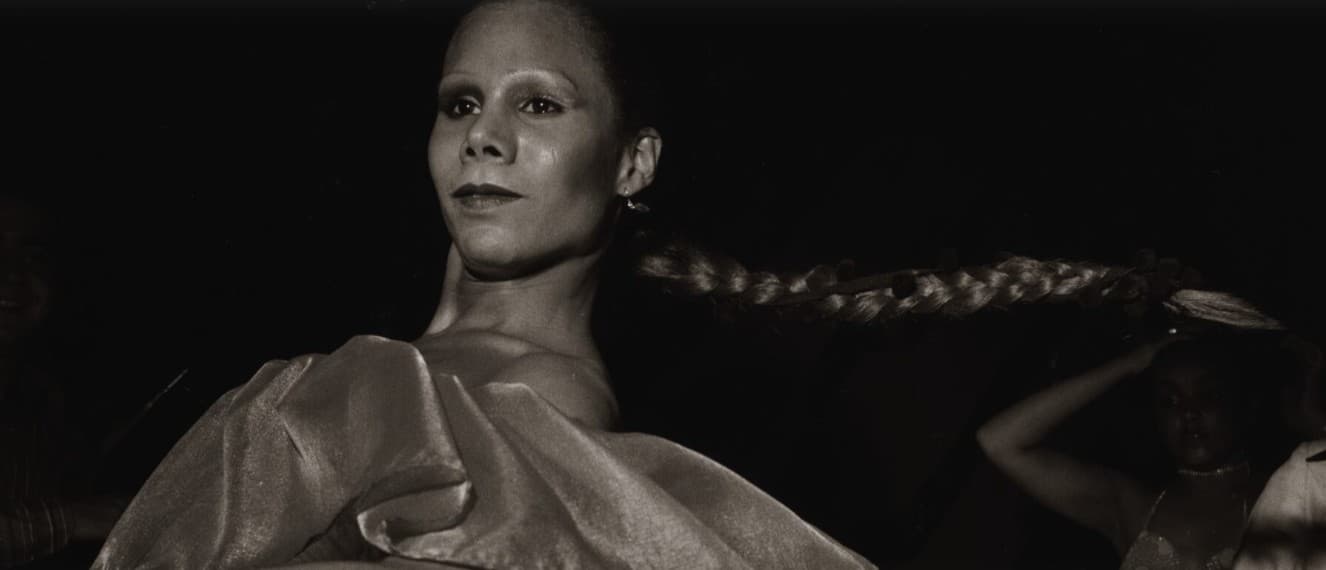
Feel the Beat: Dance in Photographs May 16, 2026–February 28, 2027 Floor 3 Dance and photography operate on different temporal planes. One unfolds over time through fluid movement, whereas the other freezes that motion in a single, suspended frame. Something electric happens when these two art forms merge. Since the early 20th century, photographers have been drawn to dancers not only to document them but to grapple with the problem of rendering motion through stillness. As technology improved, dance photography moved beyond an advertising function. Photographers began to make images in which rhythm was palpable. Drawn primarily from SFMOMA’s permanent collection, Feel the Beat: Dance in Photographs traces different ways image makers have represented dance. The exhibition opens in the Bay Area with dancer and choreographer Anna Halprin. In the decades after World War II, her experimental approach to movement transformed dance with her belief that it emerges through everyday gestures. The next gallery examines the collaboration between professional dancers and photographers, foregrounding the discipline and emotional intensity of trained bodies before the lens. At its center is the series Kamaitachi, Eikoh Hosoe’s partnership with Tatsumi Hijikata, founder of Butoh, a radical postwar form of Japanese dance theater. The final gallery shifts from the stage to social spaces, anchored by Malick Sidibé’s Mali Twist, where amateur dancers in clubs and parties radiate collective energy. Together, these works position photographers not as spectators, but as full participants in the experience of dance.

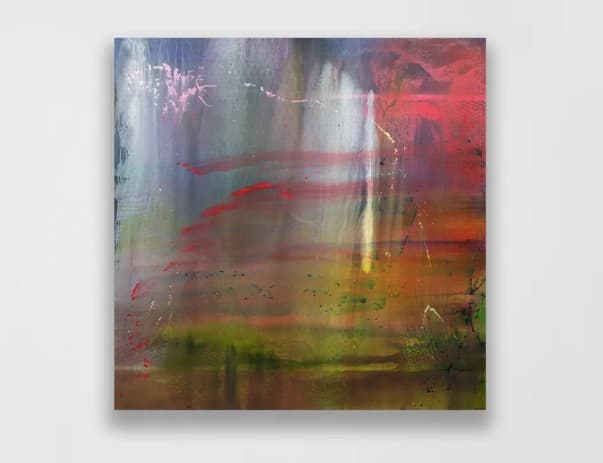
Liam Everett Sep 10 – Oct 29, 2026 Liam Everett (American, b. 1973) lives and works in Sebastopol, CA. Everett has established the studio as a site of both investigation and rehearsal. His practice is mediated by a set of open-ended, continually shifting questions as to the influence of gesture, material, obstruction, and the environment upon his work. Rather than offering definitive answers, however, Everett’s paintings further elaborate these questions and act as record of the material encounters that occur within them.
A free 2-minute email. No account, unsubscribe anytime.

Armen Krakirian is an accomplished trumpeter and private teacher based in the Bay Area, California. Holding a degree in Jazz Trumpet Performance from Oberlin Conservatory (2023), Armen's musical...

Special guest burlesque from the City of Angels! Monday Night Hubba is the perfect way to start your week sexy: with cocktails, tease, comedy and a more intimate experience than Hubba's big monthly extravaganzas! Each Monday night is a fun-filled, shimmering showcase of local, national and international burlesque and variety talent -- and a chance to see the most dazzling debuts before they hit it big!

Conjuring Power is a multimedia exhibition exploring the resilient beauty, cultural richness, and fierce resistance of Bay Area queer and trans communities. Broadly organized as a journey through time, this multimedia exhibition explores how queer and trans communities harness creativity to build culture, sustain one another, and strengthen movements across generations. Across epic murals, rarely-seen documentary photography from the 1970s and 80s, and queer-futurist contemporary video work, Conjuring Power is a potent blend of art, archive, and imagination. The exhibition will include work by Ester Hernández, Serge Gay, Jr., Tanya Wischerath, and Crystal Mason, and emerging artists from the Queer Ancestors Project, as well as archival material from the GLBT Historical Society and audio clips from Caro De Robertis’ oral histories with the groundbreaking Elders Project. Accompanying public programs such as panel discussions, gallery talks, and live performances will be announced in early 2026. An alchemy of legacy and imagination, joy and defiance, Conjuring Power is a timely exhibition that will inspire, provoke, and revitalize communities across the Bay Area.

This ensemble of accomplished and versatile musicians celebrates the music of Django Reinhardt and Stephane Grappelli’s pioneering Quintette du Hot Club de France. The HCSF borrows the instrumentation of violin, bass, and guitars from the original Hot Club while breathing new life into the music with innovative arrangements of classic tunes and original compositions from the group’s superb lead guitarist, Paul Mehling. With a swinging rhythm section, the group never fails to surprise and delight. Paul PAZZO Mehling- Solo Guitar, Vocals, Leader Isabelle Fontaine- Rhythm Guitar, Vocals Evan Zeppo Price- Violin Dexter DeWi Williams- String Bass

MoAD's Exhibitions feature a comprehensive program of current, upcoming, and past art installations dedicated to showcasing Black art and artists of the African Diaspora. As a premier San Francisco art museum, visitors can explore diverse expressions of Black art and culture, providing a rich cultural experience.
Welcome to another edition of Speed Demon: Your Harder + Faster party, at the legendary F8 - with the SF headline debut of Gusted

UNBOUND: Art, Blackness & the Universe is a groundbreaking exhibition that explores the intersections of Blackness and the cosmos. Curated by Key Jo Lee, MoAD’s Chief of Curatorial Affairs and Public Programs, the show invites visitors to reimagine Blackness not as fixed or earthbound, but as infinite—expansive, unknowable, and cosmically rich. Inspired by Lee’s essay, “Gesturing Toward Infinitude: Painting Blue/Black Cosmologies,” the exhibition asks: What if we approached Blackness with the same wonder we bring to the universe? What if, like a black hole or distant star, Blackness could be a site of mystery, power, and transformation?
Get ready for a wild adventure through the streets of San Francisco as you race against the clock in our Frenzy Scavenger Hunt.

Experience the moment Matisse used color to break the rules of modern art. In 1905, Henri Matisse sent shockwaves through the art world with Femme au chapeau (Woman with a Hat), a portrait of his wife, Amélie, painted in bold color and loose brushstrokes that defied convention. This exhibition brings the original stakes into focus and explores the enduring impact of one of Matisse’s most iconic works. Step into the gallery at the Salon d’Automne where it all began. Explore a restaging of Femme au chapeau’s public debut in 1905, bringing together the greatest number of works from that historic display in over a century. See why paintings by Matisse, André Derain, Albert Marquet, Maurice de Vlaminck, and others sparked such heated debate and admiration during their time. Trace how artists have responded to Femme au chapeau across generations. From Matisse’s peers to artists working today, such as Hilary Harkness and Rachel Harrison, see how the painting has shaped perceptions about color, content, form, and expression. The exhibition also uncovers its impact closer to home, on Bay Area Figurative artists like Joan Brown, Richard Diebenkorn, and David Park. Only at SFMOMA As the exclusive venue for this landmark exhibition, SFMOMA is the only place where you can experience the full story and radical spirit of Femme au chapeau.

Paul Klee + Ray Johnson: TYPOFACTURE August 23, 2025–July 30, 2026 Floor 2 Writing functions not only as language, but also as a visual and even tactile form. Famed artist and educator Josef Albers imparted this idea to his students at Black Mountain College, a former liberal arts school in North Carolina, where artist Ray Johnson studied from 1945 to 1948. In an exercise called “typofacture,” Albers asked students in his design course to create drawings mimicking printed or handwritten text. After observing textures on surfaces — like speckles on a wall or patterns in a raked garden path — they applied the concept to printed text, which bears the imprint of its production, whether by hand or machine. This activity left a lasting impression on Johnson, a future collage and correspondence artist, whose works (like Paul Klee’s) frequently combine text and representations. Klee’s merging of myth, symbol, figuration, and expression resonated with many at Black Mountain College and shaped Johnson’s approach. In a 1947 letter to a peer, Johnson enclosed an image of Klee’s Actor’s Mask (1924) with the postscript, “I send a Klee with cracks.” His admiration deepened into a recurring influence, visible in his expressive line work and iconic motifs like arrows and spirals. Whereas Klee’s imagery builds dreamlike worlds, Johnson’s marks accumulate like field notes across a creative terrain.

Summer Highlights July 9 – August 27, 2026
A free 2-minute email. No account, unsubscribe anytime.

Jake Elwes: Zizi in Motion: A Deepfake Drag Utopia (Movement by Wet Mess) May 23–September 6, 2026 Floor 1 What can artificial intelligence (AI) teach us about drag? And what can drag teach us about AI? Media artist Jake Elwes explores these questions in the video installation Zizi in Motion: A Deepfake Drag Utopia (Movement by Wet Mess) to critically examine the complex human and social realities brought into the process of designing digital systems. This presentation brings 21 life-size deepfakes of drag artists to the same stage on a digital LED screen in the museum’s Evelyn and Walter Haas, Jr. Atrium. Elwes collaborated closely with London-based drag queens and kings to collect closed datasets of their likenesses and construct AI-generated versions of themselves that can dance to drag legend Wet Mess’s choreography. Visual disruptions of performers’ appearances and movements bring our attention to AI’s limitations, while suggesting its gender biases and insufficient queer representations in its normative frameworks. As a performance form that challenges societal norms around gender expression, drag becomes a playful tactic for the artist to demystify and subvert these often exploitative technologies and create artwork by and for their community. Drag cast members: Baby Lame, Bolly-Illusion, Bourgeoisie, Cara Melle, Charlie Wood, Chiyo, Dahc Dermur VIII, Dakota Schiffer, HERR, Lilly SnatchDragon, Lavinia Co-op, Luke Slyka, Mahatma Khandi, Mark Anthony, Me The Drag Queen, Miss Terri Boxx, Oedipussi Rex, Ruby Wednesday, Sister Sister, TeTe Bang, Wet Mess

Feel the Beat: Dance in Photographs May 16, 2026–February 28, 2027 Floor 3 Dance and photography operate on different temporal planes. One unfolds over time through fluid movement, whereas the other freezes that motion in a single, suspended frame. Something electric happens when these two art forms merge. Since the early 20th century, photographers have been drawn to dancers not only to document them but to grapple with the problem of rendering motion through stillness. As technology improved, dance photography moved beyond an advertising function. Photographers began to make images in which rhythm was palpable. Drawn primarily from SFMOMA’s permanent collection, Feel the Beat: Dance in Photographs traces different ways image makers have represented dance. The exhibition opens in the Bay Area with dancer and choreographer Anna Halprin. In the decades after World War II, her experimental approach to movement transformed dance with her belief that it emerges through everyday gestures. The next gallery examines the collaboration between professional dancers and photographers, foregrounding the discipline and emotional intensity of trained bodies before the lens. At its center is the series Kamaitachi, Eikoh Hosoe’s partnership with Tatsumi Hijikata, founder of Butoh, a radical postwar form of Japanese dance theater. The final gallery shifts from the stage to social spaces, anchored by Malick Sidibé’s Mali Twist, where amateur dancers in clubs and parties radiate collective energy. Together, these works position photographers not as spectators, but as full participants in the experience of dance.